
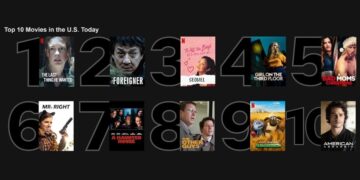
















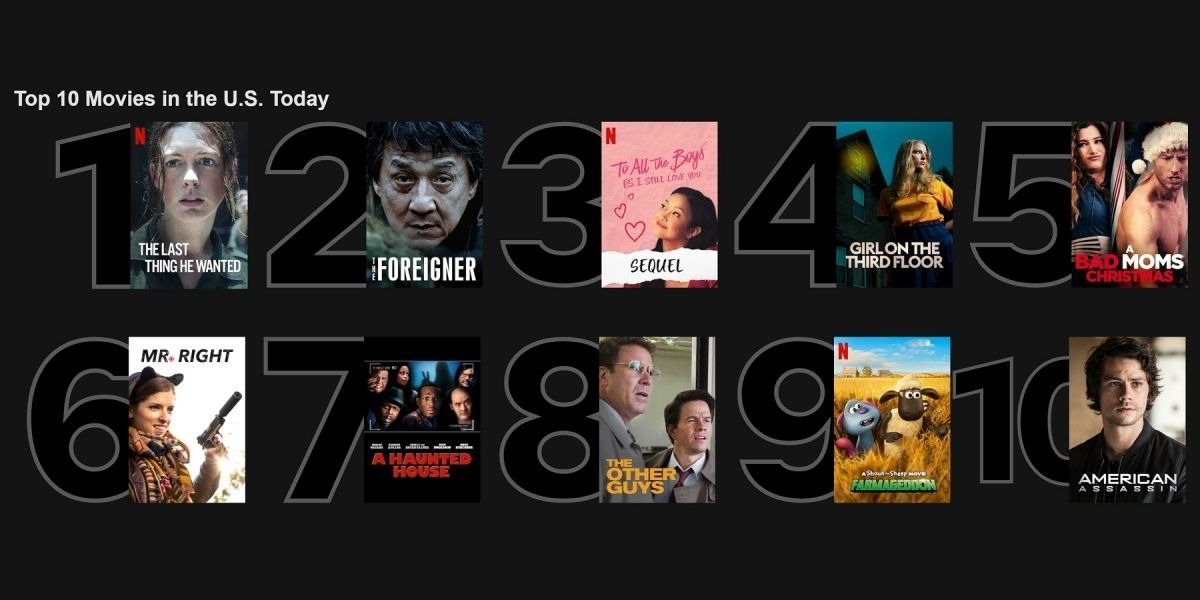

Netflix’s U.S. Top 10 movies are less about discovery than decision-making under friction. After work, late at night, or during a weekend lull, American viewers tend to press play on movies that feel immediately legible. The charts reflect that instinct more clearly than any marketing copy ever could.
Below is a U.S.-first snapshot – not a brittle ranking, but the kinds of titles that are consistently present in the U.S. Netflix movie charts in early 2026 followed by how that contrasts with global viewing patterns.
The U.S. Netflix Movie Pattern (What Keeps Charting)
| Category | What Shows Up in the U.S. Top 10 | Why It Works |
| Action / Thrillers | Star-driven, English-language action films | Fast payoff, minimal commitment |
| Animated / Family | Bright, recent animated releases | Safe, repeatable viewing |
| Crime / Based-on-True | True-crime or crime-adjacent films | Familiar hook, binge-adjacent appeal |
| Licensed Blockbusters | Recent theatrical hits | Recognition beats novelty |
These movies don’t need explaining. They don’t ask much. That’s the point.
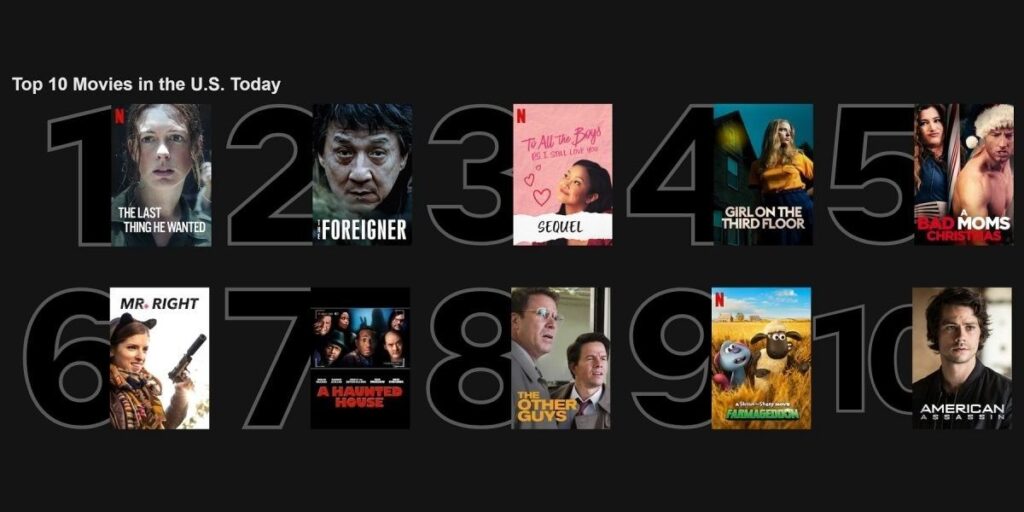


What’s notable is what’s missing: slower prestige dramas, subtitled films, or experimental releases rarely stay on the U.S. movie chart for long even when critics like them.
🌍 What the Global Netflix Charts Add That the U.S. Often Doesn’t
Globally, the same Netflix ecosystem behaves differently.
| Global Trend | How It Differs From the U.S. |
| Non-English hits | Korean, Spanish, and European films chart higher |
| Regional loyalty | Local productions dominate country-specific charts |
| Genre patience | Viewers stick longer with slower-burn narratives |
A Korean action film or a European crime drama might briefly flash in the U.S. Top 10 – but globally, those titles often outperform American mid-budget films over time.
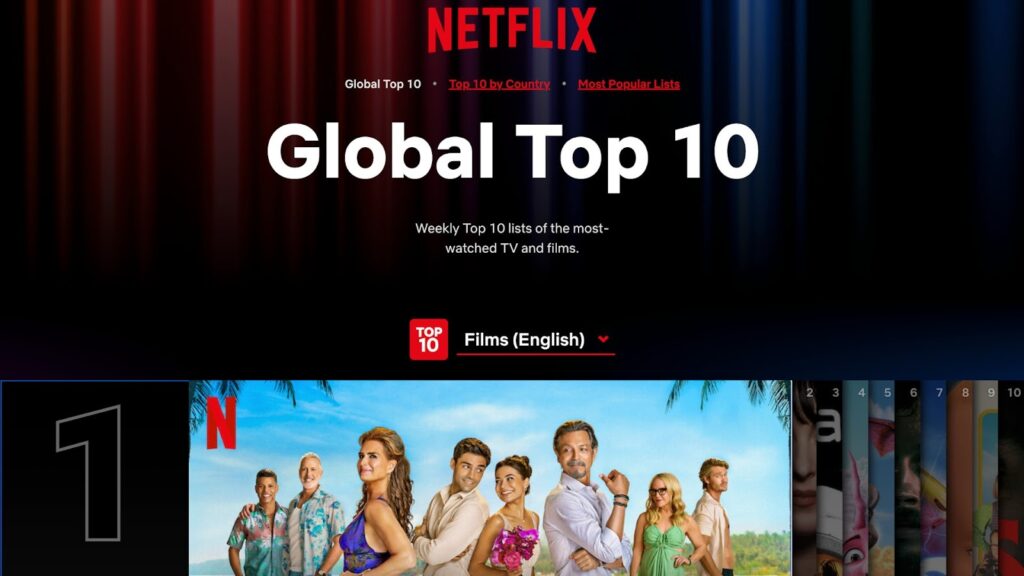


The difference isn’t taste so much as context: U.S. viewing is more transactional; global viewing is more habitual.
The Quiet Truth About Netflix’s “Top Movies” Right Now
If you’re in the U.S., the Netflix movie chart isn’t trying to surprise you. It’s trying to reduce choice anxiety. That’s why the same types of films keep resurfacing, even as individual titles rotate.
Globally, Netflix can still function as a discovery engine. In the U.S., it’s closer to a comfort machine with new packaging.
That split isn’t a flaw – it’s a signal.